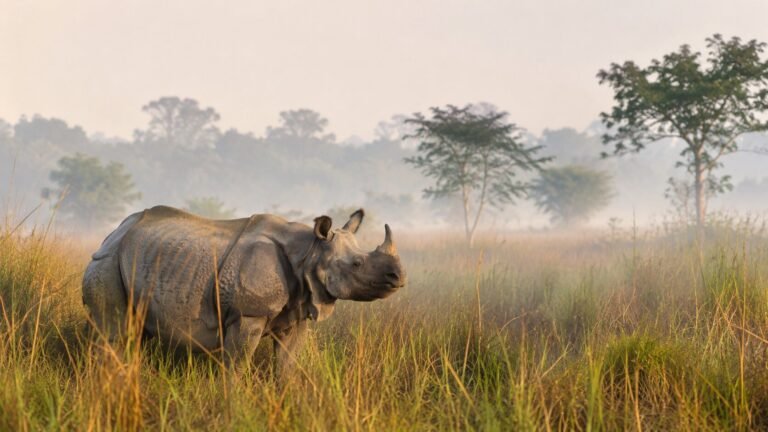

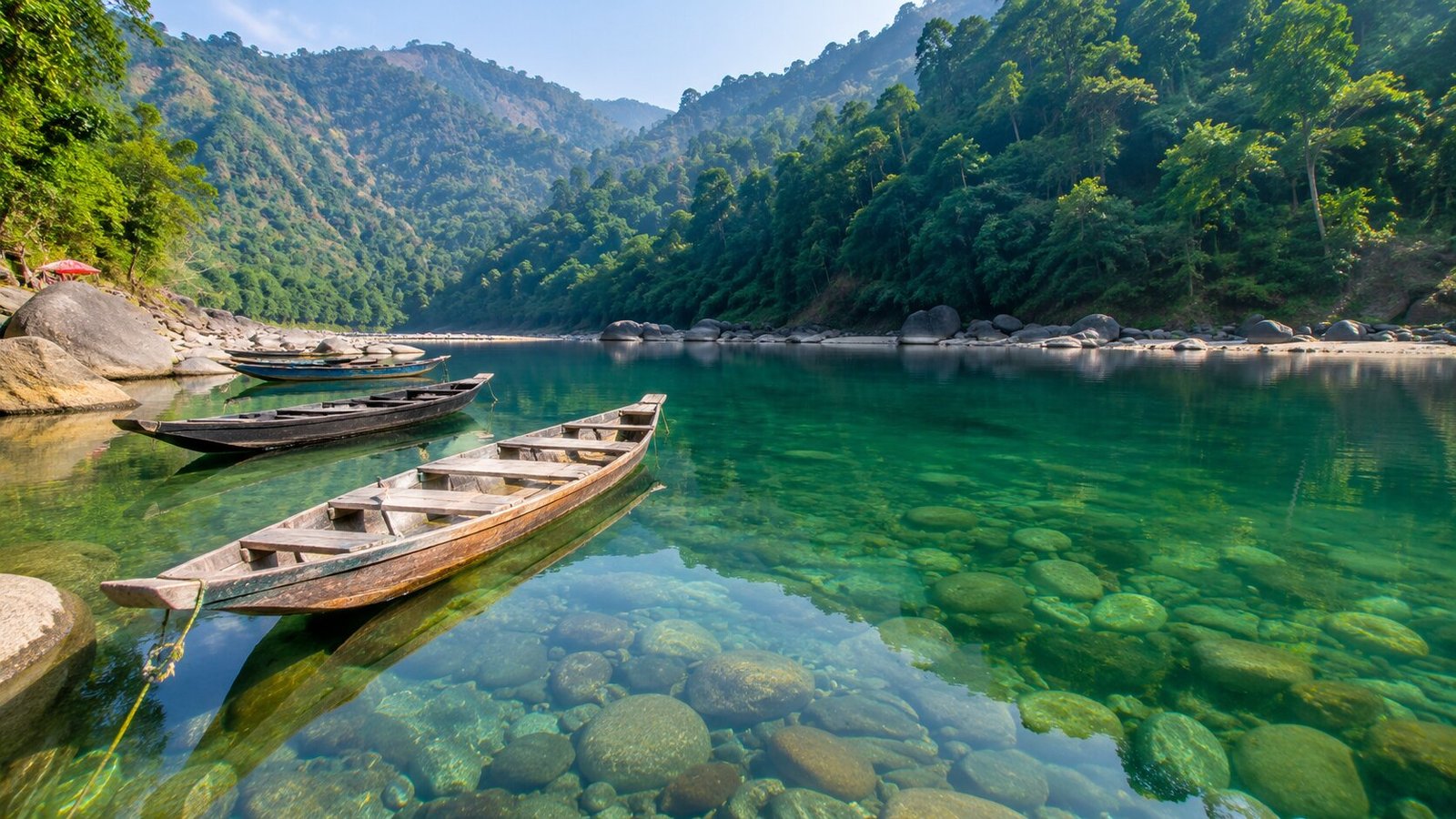
The best time to visit Meghalaya is October to April if you want clear skies, open roads and the famous glass-clear river at Dawki. Come in June to September if you want the waterfalls at their fullest and the hills wrapped in cloud, and you don’t mind rain and some slow days on the road.
Meghalaya means “abode of the clouds”, and it lives up to the name. Its rain decides which waterfalls are flowing and whether you can take a boat at Dawki. It also decides how slippery the steps to the living root bridges get, and how long the drive from Shillong to Sohra takes. This guide walks you through each season and each month, then the best time for the main places, the festivals worth planning around, and what our team on the ground sees each year.
Meghalaya’s seasons at a glance
Meghalaya has three seasons that matter to travellers: a dry, cool winter, a short warm spring, and a long, very wet monsoon. The hills around Sohra (Cherrapunji) and Mawsynram are among the wettest places on Earth. Guinness World Records lists Mawsynram as the place with the highest average annual rainfall, close to 12,000 mm a year (BBC Science Focus).
| Season | Months | What it’s like | Best for |
|---|---|---|---|
| Post-monsoon and winter | October to February | Dry, clear skies, cool to cold evenings in Shillong | Sightseeing, Dawki, root-bridge treks, festivals, photography, Cherry Blossom Festival |
| Spring and pre-monsoon | March to May | Warmer days, first showers from April | Road trips, Shillong city, Shad Suk Mynsiem |
| Monsoon | June to September | Heavy rain, mist, full waterfalls, slow roads | Waterfalls, cloud and rain lovers, flexible travellers |
| Experience | J | F | M | A | M | J | J | A | S | O | N | D |
|---|---|---|---|---|---|---|---|---|---|---|---|---|
| Sightseeing and road trips | ||||||||||||
| Waterfalls | ||||||||||||
| Clear river at Dawki | ||||||||||||
| Root-bridge trek (Nongriat) | ||||||||||||
| Festivals | ||||||||||||
| Garo Hills |
Meghalaya month by month
Use this table to match your travel month to what you’ll actually see on the ground.
| Month | Weather | What’s good | Watch out for |
|---|---|---|---|
| January | Dry, cold mornings and nights | Clear river at Dawki, root-bridge treks, quiet roads | Cold in Shillong after sunset |
| February | Dry, slowly warming | Dawki, Mawlynnong, caves, easy trekking | Waterfalls are thin |
| March | Pleasant, mostly dry | All-round sightseeing, Garo Hills trips | Occasional early showers |
| April | Warm days, first pre-monsoon rain | Shad Suk Mynsiem in Shillong, green hills | Afternoon storms |
| May | Warm and humid, rain building | Fewer crowds, lush landscapes | Dawki’s river starts to cloud |
| June | Monsoon arrives | Waterfalls start roaring, dramatic clouds | Landslides, fog, boating often paused |
| July | Peak monsoon | Waterfalls at full flow, Behdienkhlam in Jowai | Heaviest rain; keep buffer days |
| August | Very wet | Waterfalls, misty viewpoints | Slippery trails |
| September | Rain easing late in the month | Strong waterfalls with clearing spells | Roads still recovering |
| October | Clearing, fresh and green | Falls still flowing and skies opening | Busy around the Puja holidays |
| November | Dry and crisp | Wangala, Nongkrem, Shillong’s winter events, clear Umngot | Busiest month; plan well ahead |
| December | Dry and cold | Umngot River Festival, Christmas in Shillong | Holiday crowds at Christmas and New Year |
Best time to visit each place in Meghalaya
Different parts of Meghalaya peak at different times, so the right month depends on what’s on your list. For the wider picture across the region, see our guide to the best time to visit Northeast India. For places, culture and food, see our Meghalaya travel guide.
Shillong
Shillong works almost all year. October to April brings clear views from Shillong Peak and comfortable walks around Ward’s Lake and Police Bazaar. Winter also brings the city’s busy calendar of music, food and literature events. The monsoon is wet but the city stays easy to get around, which makes it a good base when the hills are cloudy.
Sohra (Cherrapunji) and its waterfalls
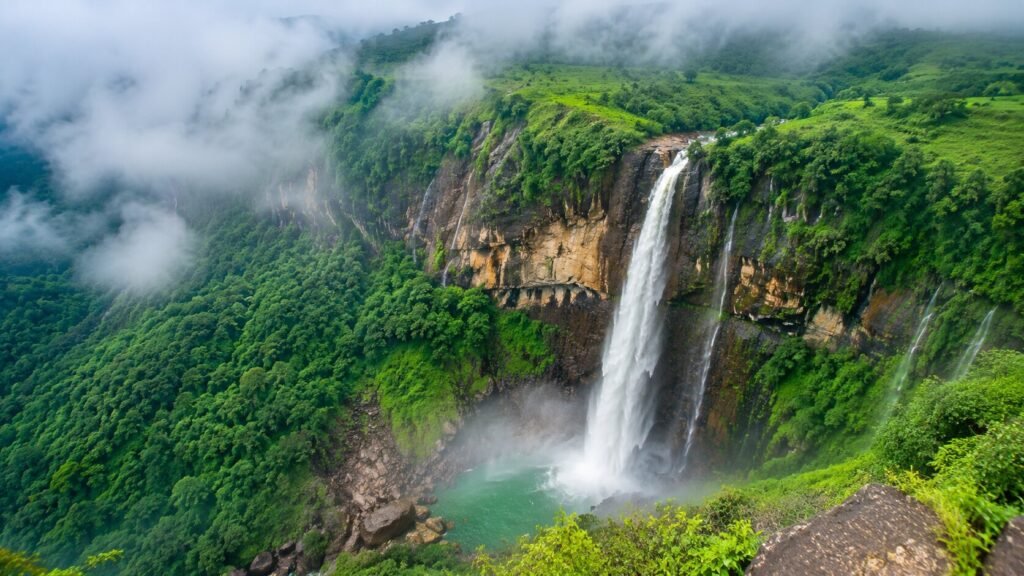
For waterfalls such as Nohkalikai, Seven Sisters and Wei Sawdong, come between June and October. The falls are at their fullest in July and August, but thick fog can hide them for hours. September and October are the sweet spot: the falls are still strong and the views open up more often. From December to March many falls shrink to a thin stream, though the canyons and caves are easier to explore.
Living root bridges (Nongriat and Riwai)
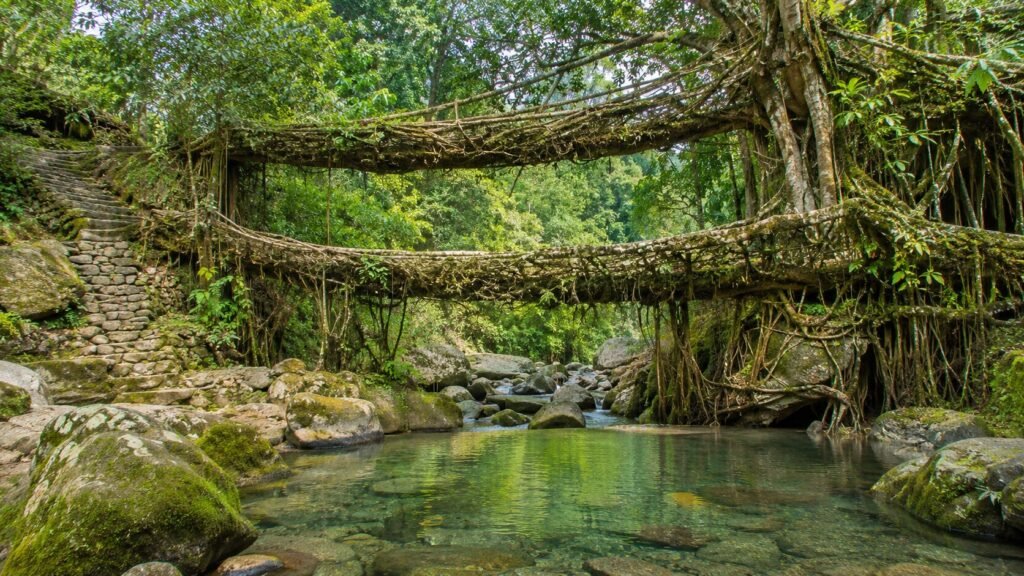
The Double Decker Root Bridge at Nongriat sits at the bottom of a long staircase of a few thousand steps. October to March is the safest time, when the steps are dry and the streams are calm enough for a swim in the natural pools. In the monsoon the steps get slippery and streams swell, so we only suggest it for fit, experienced walkers with a local guide. The single root bridge at Riwai, near Mawlynnong, is a short, easy walk in any season.
Dawki and Shnongpdeng (Umngot River)
The Umngot is famous because boats seem to float on air when the water is clear. That happens after the monsoon has passed. November to March is the clearest period, and October to April is the usual boating window. From June to September the river turns muddy and fast, and boating is often stopped for safety. The exact boating months depend on the river level each year. Dawki is also close to the India–Bangladesh border, so carry a photo ID.
Mawlynnong
Often called one of the cleanest villages in Asia, Mawlynnong is pleasant from October to May. It pairs well with Dawki and the Riwai root bridge on the same day. In the monsoon it is beautifully green, but the drive is slower.
Garo Hills and Tura
The Garo Hills in western Meghalaya see fewer visitors. October to March is best, for the Wangala festival in November, Nokrek and Balpakram national parks, and the caves of the Siju area. Monsoon roads here can be rough, so allow extra time.
Monsoon in Meghalaya: what it’s really like on the ground
The monsoon is Meghalaya’s most dramatic season, and also its least predictable one. Rain usually comes in long spells with breaks in between, and fog on the Shillong–Sohra road can cut visibility to a few metres. Landslides can block a road for a few hours, sometimes longer.
The rain itself has also become harder to predict. Sohra received 1,095.4 mm of rain in June 2025, against 3,041.2 mm in June 2024, a drop of about 64% (India Today NE / PTI). The same report noted that Sohra’s yearly average since 2005 has been around 8,000–9,000 mm, below the roughly 11,000 mm it was known for. In July 2026, East Khasi Hills recorded 1,403 mm against a normal of 2,796 mm, about a 50% shortfall, according to IMD figures reported by PTI (ETV Bharat).
What that means for your trip: a monsoon visit can bring a run of bright days or a full week of downpours. Plan your route so that the must-see places have a back-up day.
Monsoon tip: start drives early, avoid hill roads after dark, and keep at least one flexible day in a monsoon trip.
Festivals in Meghalaya by month
Festivals are a great reason to time your trip. Dates for tribal festivals are set locally each year, so check close to travel.
| Month | Festival | Community and place | What to expect |
|---|---|---|---|
| April | Shad Suk Mynsiem | Khasi, Shillong | Thanksgiving dance in traditional dress |
| July | Behdienkhlam | Pnar, Jowai | Rain-season festival with tall decorated structures carried through town |
| November | Nongkrem Dance | Khasi, Smit | Five-day harvest and thanksgiving festival |
| November | Wangala (100 Drums) | Garo, Tura and the Garo Hills | Harvest drums and dance; listed as 13 November in 2026 |
| November | Shillong Literary Festival | Ward’s Lake, from 12 Nov 2026 | Books, talks and music |
| November | Cherry Blossom Festival | Madan Kurkalang, Bhoirymbong, 20–21 Nov 2026 | Blossoms, music and food stalls |
| December | Umngot River Festival | Shnongpdeng, from 3 Dec 2026 | River activities and local culture |
| December | Me•Gong Festival | Tura, from 4 Dec 2026 | Garo music, food and culture |
| December | Winter Tales | Shillong, from 17 Dec 2026 | Winter music and arts |
2026 dates for the last five events are from Meghalaya Tourism’s events calendar; the Wangala date is from Office Holidays. Dates can change, so confirm before travel.
What to pack for Meghalaya, by season
- All year: walking shoes with good grip, a light rain jacket, a photo ID (needed near Dawki), cash for small villages and a power bank.
- October to February: warm layers, a jacket for Shillong evenings, and a cap and sunscreen for bright days.
- March to May: light cotton clothes, a light fleece and an umbrella for afternoon showers.
- June to September: a proper rain jacket or poncho, quick-dry clothes, waterproof bag covers, sandals with grip, and leech socks for forest walks.
Planning Meghalaya groups by season
If you are planning a group to Meghalaya, the season changes how the trip should be built.
- October to April: the easiest window for families, school groups and corporate trips. Demand peaks in November, December and over Puja and New Year, so lock dates early.
- June to September: good for photography and “monsoon special” groups, but build in buffer days and set expectations about fog, paused boating and changed plans.
- Mixed-ability groups: swap the full Nongriat trek for the Riwai root bridge and viewpoints.
- Combining states: Meghalaya pairs easily with Guwahati and Kaziranga in Assam on longer Northeast circuits.
Sample routes (for inspiration)
These routes are starting points only. Every trip we plan is customised to your dates, pace and interests.
Dry-season classic (October – April)
Guwahati → Shillong → Sohra (waterfalls, caves, optional Nongriat trek) → Mawlynnong and Riwai → Dawki and Shnongpdeng → Guwahati
Monsoon waterfall route (June – September)
Guwahati → Shillong → Sohra (two nights, so the fog has time to lift) → Mawlynnong → Shillong (one buffer day) → Guwahati
Frequently asked questions
What is the best month to visit Meghalaya?
October and November are often the best all-round months. Waterfalls are still flowing, skies are clear and the Umngot at Dawki is turning clear. November is also festival season, which makes it the busiest month.
Is it safe to visit Meghalaya during the monsoon?
Yes, with sensible planning. Main roads stay open most of the time, but landslides and fog can cause delays. Travel with a local driver, avoid driving after dark and keep a buffer day.
When is the water at Dawki clear?
The Umngot River is clearest from about November to March. From June to September it turns muddy and boating is often stopped.
Can I see waterfalls in Meghalaya in winter?
Yes, but they are much thinner. Bigger falls such as Nohkalikai still flow, while smaller ones may dry up. For strong falls with clearer views, choose September or October.
When is the best time for the Double Decker Root Bridge trek?
October to March, when the steps are dry and the streams are calm. The trek is steep, so allow most of a day for the round trip.
Do I need a permit to visit Meghalaya?
Entry to Meghalaya is simpler than to Arunachal or Nagaland. Rules for foreign nationals and some border areas can change, though, so check the latest rules before you go or ask our team.
How many days do I need for Meghalaya?
Most travellers spend four to six days to cover Shillong, Sohra, Mawlynnong and Dawki at a relaxed pace. Add a day or two for the Nongriat trek, the Garo Hills or monsoon buffer days. To explore Meghalaya’s offbeat places, plan a few more days beyond the usual circuit of popular sights.
Plan your Meghalaya trip with locals
Meghalaya rewards good timing. Come after the monsoon for clear rivers and open skies, in the rains for roaring waterfalls, or in November for festivals. Whichever season you pick, our local team can shape the route around the weather that week.
Last updated: 18 November 2026. Rainfall figures and 2026 festival dates verified on 6 November 2026. Festival dates and boating rules can change, so please confirm close to travel.
Last updated: 18th November 2026. Permits, weather and road conditions change. Check current conditions before you travel.

Our on-ground team plans trips across Northeast India for travellers, travel agents and groups.